Vistas de página en total

sábado, 9 de mayo de 2020

10 mysterious police cases that are still unsolved

10 mysterious police cases that are still unsolved (case 1)

1. THE ZODIAC KILLER

 (Photo/mk-zodiac.com)
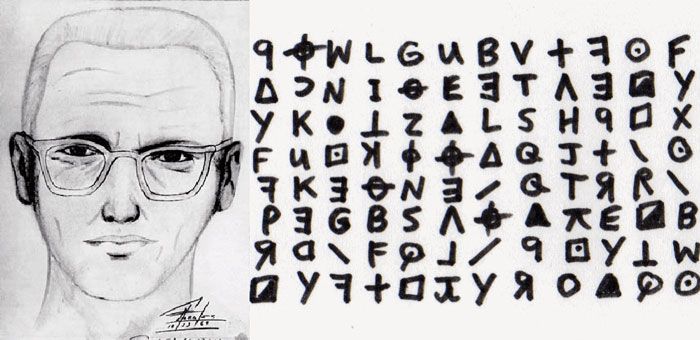
Most people are usually quiet about their crimes, but "Zodiac", as he dubbed himself, was anything but. From 1968-1969, he terrorized San Francisco with his murder spree, taunting the police with his coded letters to the local paper. He had at least five killings directly connected to him, although he claims to have killed 37 people. His terror began when Betty Lou Jensen, 16, and David Arthur Faraday, 17, were found lying outside of their bullet-peppered car. Jensen was found dead at the scene with five gunshot wounds to her back, while Faraday died of a bullet to the head en route to the hospital. Half a year later, a couple who parked their car four miles away from that crime scene was also gunned down, one injured and one killed. The survivor, Michael Mageau, was able to give a description of the killer. He described a heavyset white man around 5'8". It would be the Zodiac Killer himself that would give the police the remaining evidence.
 At 12:48 a.m. that same night, police received a strange call:
"I wish to report a double murder. If you go one mile east in Columbus Parkway to a public park, you will find the kids in a brown car. They have been shot with a nine-millimeter Luger. I also killed those kids last year. Good-bye."  
A month later, newspapers received the first letter from the Zodiac Killer. He demanded them publish the letter on the front page or he'd go on a killing rampage. The letter described the murders, all written with mysterious ciphers that seemed to form a code. This was a common theme with the other letters he would send, all signed with a crossed-circle symbol. One such letter was decoded by a high-school teacher and his wife. It read:
 "I LIKE KILLING PEOPLE BECAUSE IT IS SO MUCH FUN IT IS MORE FUN THAN KILLING WILD GAME IN THE FORREST BECAUSE MAN IS THE MOST DANGEROUE ANAMAL OF ALL TO KILL SOMETHING GIVES ME THE MOST THRILLING EXPERENCE IT IS EVEN BETTER THAN GETTING YOUR ROCKS OFF WITH A GIRL THE BEST PART OF IT IS THAE WHEN I DIE I WILL BE REBORN IN PARADICE AND THEI HAVE KILLED WILL BECOME MY SLAVES I WILL NOT GIVE YOU MY NAME BECAUSE YOU WILL TRY TO SLOI DOWN OR ATOP MY COLLECTIOG OF SLAVES FOR MY AFTERLIFE EBEORIETEMETHHPITI."
The Zodiac Killer would go on killing and leaving frustrating evidence for the police– coded letters, anonymous phone calls, the crossed-circle written on victims' cars, sending over blood-stained shirts, accounts from survivors– but the police never found him.  
Read more about the Zodiac Killer here. 

10 mysterious police cases that are still unsolved (case 2 )

2. THE TAMAN SHUD CASE

 (Photo/oddx.com)
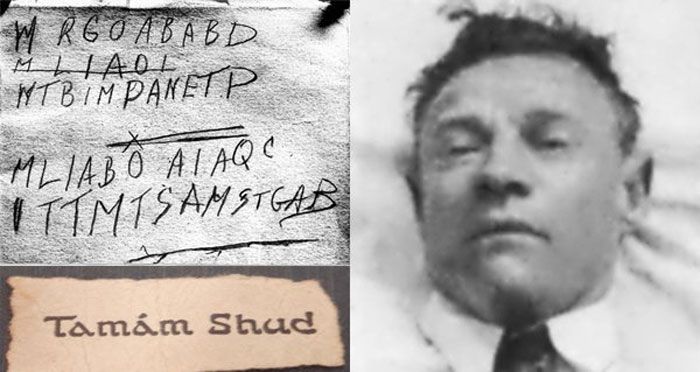
The Zodiac Killer wasn't the only one who loved to use codes. On the morning of December 1st, 1948, a body was found on Somerton Beach in Adelaide, Australia. The man's body was in perfect condition, with no injuries to be found. He was well dressed, although all the labels on his clothes were missing. In his pocket was a train ticket to Henley Beach, never to be used. It would be a month later when they would find a suitcase linked to him at Adelaide Railroad Station. Its label was removed as well as those on the articles of clothing inside it. Unfortunately, it led to no clues, just like his autopsy, which reported no foreign substance in his body that could directly link his death to poisioning. A month later they would find the most substantial but puzzling evidence in a secret pocket in the man's trousers. It read, "Taman Shud."   
Public library officials called in to translate the phrase. They concluded that it meant "ended" or "finished", which can be found in a collection of poems entitled The Rubaiyat of Omar Khayyam. Immediately police ran a nationwide search for the book where this scrap paper was torn from. A man came forward, claiming that he found the book in the backseat of his unlocked car a week or two before they discovered the body. On the back of it was a strange code scrawled out in pencil. A phone number linking to a nurse was also discovered, though the nurse said she had given a copy of the Rubaiyat to an army officer named Alfred Boxall. Both the man who found the book and the nurse denied any connection with the dead man. They never got any further with the case, although many suspect it may have been a suicide since the book's theme was about having no regrets when life ends. Others think he may be a spy. And until there are any breaks in the case, his grave will remain reading, "Here lies the unknown man who was found at Somerton Beach 1st Dec. 1948."
Read more about The Taman Shud Case here.

10 mysterious police cases that are still unsolved (case 3)

3. THE TARA CALICO CASE

 (Photo/crimelibrary.com)
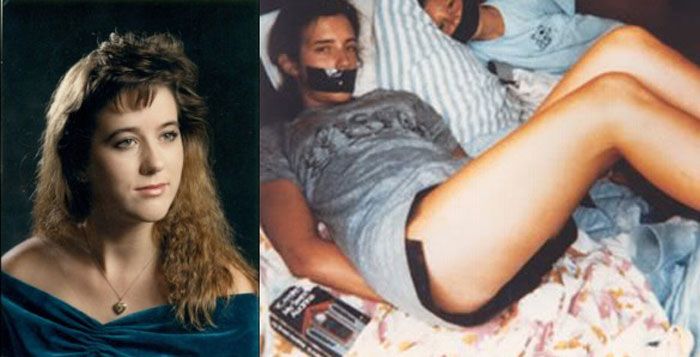
On the morning of September 20th, 1988 in Belen, New Mexico, it seemed like a perfect day to ride a bike. Tara Calico borrowed her mother's pink bike to go out for a spin. Extroverted and active, she worked as a bank teller and was studying to become either a psychologist or psychiatrist. She planned to play tennis that afternoon and asked her mom to drive out after her in case she got a flat tire and didn't return home by noon. She never did return. Every lead went to a dead end until a year later, when a photo was found depicting a young woman her age and a missing boy, both gagged.  
The Polaroid photograph was found in a parking lot outside a Junior Food Store in Florida. The nine-year-old, Michael Henley, went missing in the same area as Calico in April of 1988 when he was hunting turkeys with his father. They appeared to be in the back of a van, with a copy of a book written by V.C. Andrews, Calico's favorite author, lying right beside the girl. Initially, Tara's mother didn't think the girl was her, but the girl in the photograph had a scar identical to Calico. But still, due to the lack of evidence, many experts dismiss the photograph. In 1990, Michael Henley's body was found in Zuni Mountains where he was hunting, which strongly disconnects the theory that the two were abducted and taken to Florida. Calico's parents would eventually die, never finding out who took their daughter.
Read more about the Tara Calico Case here.

10 mysterious police cases that are still unsolved (case 4)

4. THE SEVERED FEET MYSTERY

 (Photo/thedailybeast.com)
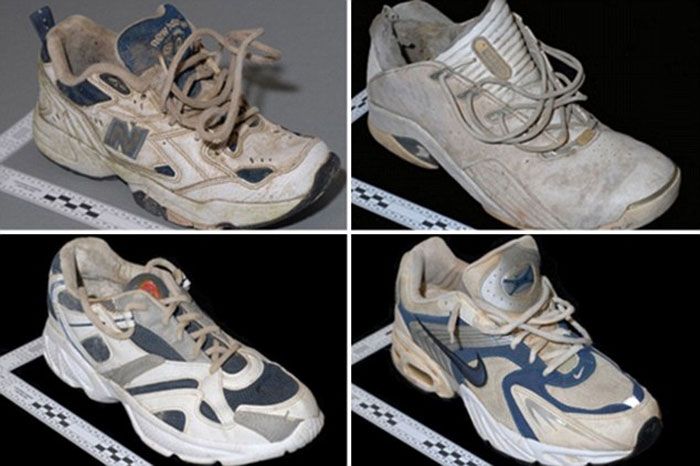
In 2007, a girl was roaming a beach in British Columbia when she found a sneaker. To her horror, as she opened up the sock, she found that a human foot was inside. Since then, a number of severed feet have washed ashore. The feet have been connected to five men, one a woman, and three of unknown sex. Throughout the years, with a hoax foot thrown here and there, the case has never been completely closed, with many theories floating around as to who the feet belonged to.
The Vancouver police managed to identify one foot in 2008, matching its DNA to a man who was described as suicidal. They later were able to match two other feet to a woman who was also believed to have committed suicide. Because of these findings, many speculate that the feet belong to those who jumped off a bridge to their deaths. However, because of the rarity of only feet and no other body parts showing up, some believe that the feet were connected to a plane crash by a nearby island. Other suggest they were those of the victims of the Asian Tsunami in 2004, since the make of the shoes were all manufactured before 2004. Whatever sources these feet are coming from, they have left the world baffled for years.
Read more about The Severed Feet Mystery here.  

10 mysterious police cases that are still unsolved (case 5 )


5. THE DEAD WOMAN WHO NAMED HER KILLER

 (Photo/historicmysteries.com)
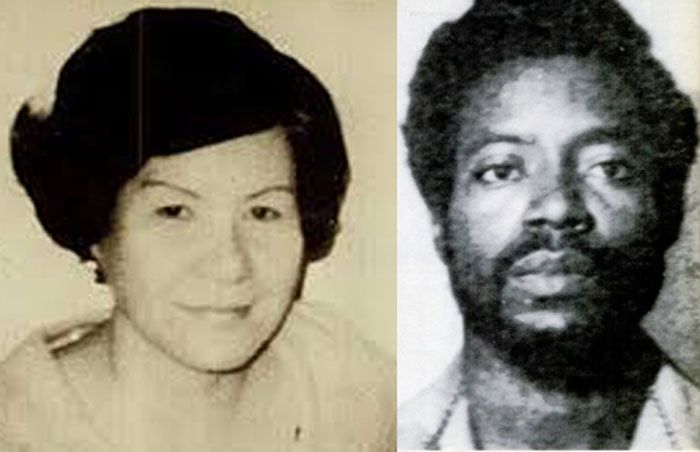
Although this case has been solved, how it was solved remains a mystery. In 1977, a respiratory therapist in Chicago was murdered in her apartment. Teresita Basa was found under a flaming mattress, a butcher knife buried in her chest. Police attempted to track her stolen jewelry with no luck. They also failed in trying to link any of the suspects to the crime. It seemed impossible to find the perpetrator, that is, until Remy Chua, a co-worker who barely knew the victim, involuntarily became a leading source of information.
Chua began having frequent visions and nightmares about Basa. It started in the locker room of her work, where she experienced seeing a man's face behind Basa. This would repeat in her dreams. Chua then began channeling Basa's spirit when conversing with her husband. While channeling Basa's shirit, Chua told her husband the entire story of Basa's murder. She claimed an orderly at the hospital named Alan Showery was helping Basa with her television when he assaulted her. He then killed her and set her mattress on fire. The spirit was even able to give the details of what happened to her jewelry, which was given to Showery's common-law-wife. Mr. Chua convinced his wife to give these details to the police.
The police were skeptical at first, but after seeing the Basa's jewelry on Showery's wife (Basa's cousin was able to confirm it just as the spirit said she could), the police were able to convict the man for fourteen years in jail. Unfortunately, there was not enough evidence to convict him longer. But was it really Basa's ghost who named her killer? Perhaps Chua had knew some facts in the case and disguised it as a spirit possessing her? What ever led police to the killer remains to be a mystery.
Read more about the case of The Dead Woman Who Named Her Killer here.  

10 mysterious police cases that are still unsolved (case 6)

6. THE BOY IN THE BOX

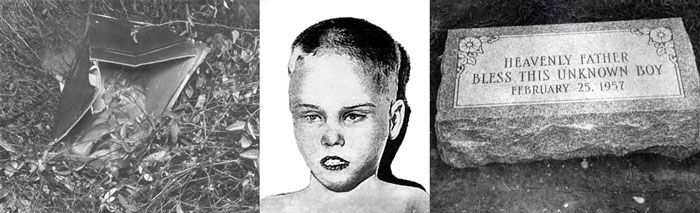
 (Photo/nydailnews.com/historicalmysteries.com/glogster.com)
It was the year 1957 in Philadelphia when a hunter found the bruised body of a boy in a JC Penney box. The boy, around four to six years-old, was nude and wrapped in flannel. He seemed to have died from blows to the head. Fearing his muskrat traps would be confiscated by police, the hunter didn't report the body. It was two days later when a college student found the body, that the police started on the case of "America's Unknown Child." It immediately attracted the media's attention, and flyers of the boy were seen throughout Pennsylvania.
Although police received thousands of leads, they were never able to uncover the identity of the young boy. They tried tracing back the JC Penney box and checking the boy's fingerprints, but everything led to a dead end. However, there were two promising leads of note. One lead involved a foster home located 1.5 miles away.
A medical examiner, who pursued the case until his death, had a psychic lead him to the foster home, where he found a bassinet similar to the one that was sold in the box. Hanging on the clothesline were blankets much like the one wrapped around the boy. He believed the boy belonged to the stepdaughter of the man who ran the home, and she didn't want to be found as an unwed mother. Police interviewed the couple, but closed the investigation.
In 2003, they opened the case again when interviewing a woman identified as "M" who claimed her abusive mother bought the child back in 1954. According to her, her mother killed the boy in a fit of rage. Because "M" was mentally unstable, the investigation was closed as well, leaving the boy to remain "America's Unknown Child."       
Read more about The Boy in the Box here.

10 mysterious police cases that are still unsolved (Case 7)

7. THE JEANETTE DEPALMA CASE

 (Photo/weirdnj.com)
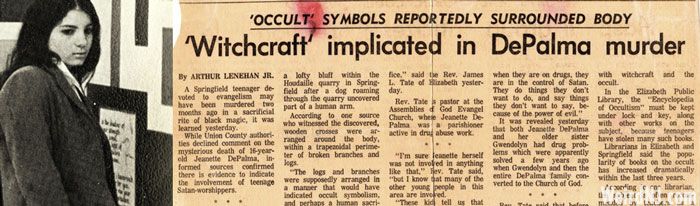
Usually people connect witches to Salem, MA, but for this particular case, the witches were in Springfield, New Jersey. It all started in 1972 when a dog brought home a decomposed forearm home. This prompted a police search and a body was soon found afterwards atop a cliff in Springfield. The body was identified to be that of Jeanette DePalmer, a 16-year-old who had gone missing for six weeks. Immediately, rumors began spreading as to the cause of her death. The hill where she was discovered was covered with occult symbols and many believed her body was placed on a makeshift altar. Many locals, even some police members, blame a coven of witches, otherwise known as Satanists, who used DePalma for a human sacrifice.  
Because of a flood, much of the case's details have since been destroyed. However, some reports from local papers mention that police couldn't determine the cause of death due to her badly decomposed body. They had also investigated a local homeless man who was a prime suspect, only to find no connection with the killing. As for the occult theory, many believe that DePalma may have provoked a group of Satan worshipping teens at her high school when she was trying to evangelize them. She was involved with a group who helped drug addicts by finding faith in Christ. The reverend who ran the group theorized that she was selected as a sacrifice to the group because of this. Was she a human sacrifice? Or did these suspicions help hide the real killer? Perhaps no one will ever know.
Read more of The Jeanette DePalma Case here.    

10 mysterious police cases that are still unsolved (case 8)

8. THE GLICO-MORINAGA CASE

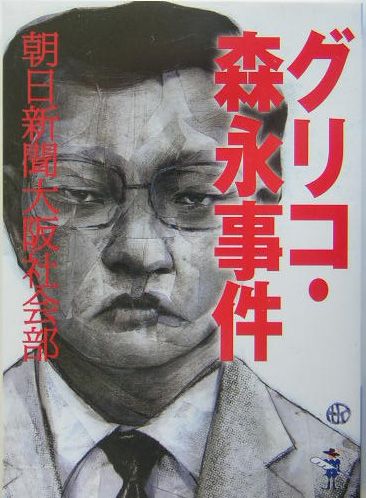
 (Photo/cdn.kizaz.com)
Okay, brace yourselves, because this case is as twisted as a TV crime show. It deals with the Japanese companies Ezaki Glico, best known for its Pocky snacks, and Morinaga. In 1984, two armed men in masks broke into CEO Katsuhisa Ezaki's mother's home and bound her, taking the house key of Glico's CEO. Entering his house, they also tied up his wife and daughter. Mrs. Ezaki attempted to negotiate money with the men, but they were after something else. Cutting off the telephone cords, they raided the bathroom, where Ezaki and his other two children were hiding. They abducted Ezaki and held him hostage at a warehouse. They issued a ransom for 1 billion yen and 100 kilograms of gold bars. Their plans were discovered when Ezaki managed to escape three days later.
A few weeks later, just when the company thought it had escaped extortion, vehicles in its headquarter's parking lot were set on fire. Then, a container with hydrochloric acid and a threatening letter addressed to Glico were found in Ibaraki, where the warehouse was located. This began a string of letters from a person or group that dubbed itself "The Monster with 21 Faces," named after a villain in a Japanese detective series. The letters threatened the company's products, claiming that their candies were laced with potassium cyanide soda. Glico was forced to pull the products off the shelves, resulting in a $21 million loss and the layoff of 450 part-time workers. 
After months of tormenting Glico, the Monster with 21 Faces decided to look for fun someplace else. Their final letter towards the company read, "We forgive Glico!" With that abrupt ending, they turned their sights on the food companies Marudai Ham, House Foods Corporation, and Fujiya. In exchange of stopping their harassment towards Marudai, one of its employee was to hand them ransom money on a train. That was when an investigator, who disguised himself as an employee, saw the prime suspect, known as the "Fox-Eyed Man." The man was well-built, his hair cut short and permed, with "eyes like those of a fox." After dropping the ransom as instructed, he and another investigator attempted to follow the Fox-Eyed Man, only to lose him. They would get a second chance later on, but he again evaded them.   
After continuing harassment towards the police, a year later Police Superintendent Yamamoto committed suicide by setting himself on fire, ashamed of his failure to capture the Fox-Eyed Man. Five days following the death, the Monster with 21 Faces sent its final letter to the media:
"Yamamoto of Shiga Prefecture Police died. How stupid of him! We've got no friends or secret hiding place in Shiga. It's Yoshino or Shikata who should have died. What have they been doing for as long as one year and five months? Don't let bad guys like us get away with it. There are many more fools who want to copy us. No-career Yamamoto died like a man. So we decided to give our condolence. We decided to forget about torturing food-making companies. If anyone blackmails any of the food-making companies, it's not us but someone copying us. We are bad guys. That means we've got more to do other than bullying companies. It's fun to lead a bad man's life. Monster with 21 Faces."
And with that final statement, the Monster with 21 Faces disappeared, never to be heard from again.
Read more about the Glico-Morinaga Case here.

10 mysterious police cases that are still unsolved (Case 9)

9. THE SS OURANG MEDAN

 (Photo/paranormalqc.com)
Ghost ships aren't just portrayed in legends and movies such as The Pirates of the Caribbean. In this true story, the entire crew mysteriously perished. It all started in 1947, when ships traveling the straits of Malacca (located between Sumatra and Malaysia) heard a troubling distress call:
“All officers including captain are dead, lying in chartroom and bridge. Possibly whole crew dead.” Following the message was some indecipherable Morse code and then finally, “I die.”
An American ship called Silver Star answered the distress call and found the Ourang Medan, but there were no signs of the crew on the deck, even when they tried to call to them. And so they boarded the ship, only to find themselves in a horror scene. Scattered across the deck were the corpses of the Dutchmen, their faces construed in such a way one would think they had witnessed something ghastly before their demise. Even the dog was dead, its face also contorted in agony. The captain's body was found on the bridge, while the communication officer was still at his post, his cold fingers still pressing the telegraph. The American crew went down to the boiler deck to find the same situation. Despite it being over a hundred degrees down there, a cold chill came over them.
Retreating to their ship again, they decided to tow the Ourang Medan to port. But as soon as they attached the tow line, smoke began billowing out of the ship. Moments later it exploded, sinking into its watery grave, taking all its secrets along with it. What horrible thing did the crew witness? Some believe it was the work of the paranormal. Perhaps a band of ghost pirates raided the ship or aliens decided to drop in. Such unexplainable things do happen, as firefighter and EMT Mick Mayers have experienced in his firehouse. Others, however, have more scientific explanations.
Many theorize that the Dutch ship was smuggling hazardous materials such as potassium cyanide and nitroglycerin. Sea water may have interacted with the cargo, causing the toxic gases to be released and poison the crew. The nitroglycerin would later cause the explosion. Or maybe there was trouble in the boiler room and carbon monoxide killed the crew and a fire got out of hand and destroyed the ship. What is most troubling is the fact that, although the Silver Star is very real, there isn't any registration records of the ship. Did the ship even exist, or is it merely a sailor's tale? 
Read more about The SS Ourang Medan here.

10 mysterious police cases that are still unsolved (case 10)

10. THE CAPE INTRUDER

 (Photo/capeelizabeth.com)
This final unsolved case is not a famous case, but a local one that I remember from years ago, occurring in a neighboring town. If not for a brief mention of it in an old clip archive regarding a neighborhood watch, I might have thought it was just my imagination. Back in 2005, in the affluent town of Cape Elizabeth, Maine, the community experienced something unnerving. During the night, victims who kept their doors unlocked, would wake up in the morning to catch a brief glimpse of a man staring at them. Before they could react, the man would flee the scene, leaving the house just as it was before he entered it. Nothing was stolen. Nobody was injured or killed. All that he took was their privacy when he snuck into their bedrooms to watch them sleep. 
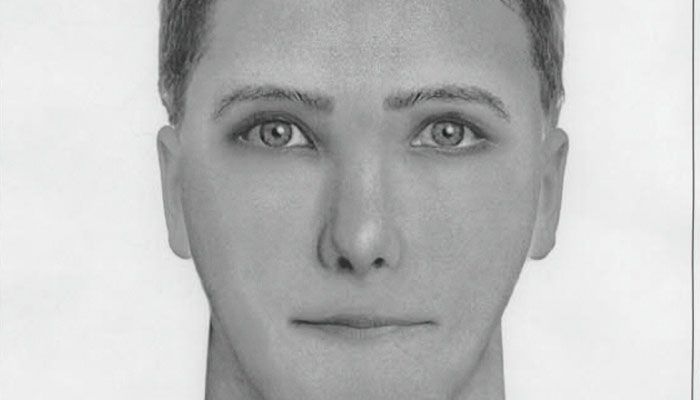
A rough sketch depicting a man in his early twenties played on the local news. Everybody seemed to think they knew who it was and the police received a number of calls from concerned citizens naming possible suspects. Although two people named the same person, the police never did catch the "Cape Intruder". After some intrusions in August, December, and February, he never did break in again. Perhaps he had his fill of staring at sleeping bodies during that time period. But the thought that such a person existed and still walks among us is enough to give anyone the chills. And of course, serves as a grim reminder to lock our doors. 


Wow.. scholarships for lawyers

Scholarships (Becas) for Foreign-Trained Lawyers


 En Español: Becas para Estudiantes Internacionales

The University of Miami School of Law is dedicated to helping international students meet their educational expenses through loans, grants and scholarships. In addition to scholarships from home country sources, international students have the opportunity to be considered for various sources of funding.

Dean's Merit Scholarships

The University of Miami School of Law awards partial scholarships each year to entering LL.M. students with excellent academic records and other outstanding qualifications for the post-graduate study of law. Dean's Scholarships are available to LL.M. students and are awarded separately at the time of admission to an LL.M. program. No separate application is required for the Dean's Scholarships; all admitted students are automatically considered for them.


Privately Funded Scholarships

The law school also has the ability to offer awards that are privately funded by our alumni and others to help with financial support for foreign graduate students. Awards are based on merit, need, and other factors.  Some awards are designated for specific LL.M. programs as indicated below:
  • International Arbitration Institute Scholarship - one or more partial tuition scholarships to study in the White & Case International Arbitration LL.M. program.
  • Young ICCA Scholarship - one full-tuition scholarship to study in the White & Case International Arbitration LL.M. program.
  • White & Case/Carolyn B. Lamm Scholarship - one full-tuition scholarship to study in the White & Case International Arbitration LL.M. program.
  • Cobb Family Fellowship: The Scholarship provides a living stipend for a graduate of the University of Iceland to study at the University of Miami for one year. The Cobb Fellowship was created by Charles E. Cobb, Jr., former Ambassador to Iceland and member of the University's Board of Trustees.


Half Scholarships

There are also a multitude of opportunities to receive half-scholarships through one of our various organization partnerships. These include:
Vis Moot: one half-tuition scholarship is available for a present or past student participant, coach or arbitrator in the: Willem C. Vis International Commercial Arbitration Moot Competition in Vienna, Austria or the Willem C. Vis International Commercial Arbitration Moot (East) Competition in Hong Kong, SAR China.
UBA-Rosario Competencia Internacional de Arbitraje: one half-tuition scholarship is available for a present or past student participant, coach or arbitrator in the UBA-Rosario Competencia Internacional de Arbitraje.
Foreign Direct Investment (FDI) Moot Scholarship: one half-tuition scholarship is available for a present or past student participant, coach or arbitrator in the FDI Moot competition.
AIJA: one half-tuition scholarship is available to be awarded to a member.
e-Fellows:, one half-tuition scholarship is available for a present or past participant of the E-fellows LL.M. Day in Berlin, Frankfurt or Munich, Germany.
Moot Madrid: one half-tuition scholarship is available for a present or past participant of the competition.

Research Assistant Program

LL.M. students can be selected to serve as Research Assistants to international faculty during the academic year. This position requires a commitment of 10 hours per week. To be considered for a Research Assistant position at the School of Law, please complete a Research Assistant Request Form and submit it with an application to the International Graduate Law Program office. Miami Law encourages students to apply early if they wish to be considered for a research assistant position.

Scholarship Agreements with International Institutions

Miami Law is committed to attracting the brightest legal minds abroad and strengthening bilateral cooperation in legal education. In an effort to promote stronger ties with foreign law schools and associations we have entered into various cooperation agreements with institutions abroad. The agreements offer a $15,000 USD scholarship toward LL.M. tuition fees for all LL.M. programs that accept foreign-trained lawyers. Up to four outstanding law graduates from each school or four outstanding members of each organization are eligible. Miami Law reserves the right to admit or reject an applicant. Recipients are nominated by each of the foreign law schools or associations. Miami Law will evaluate and award applicants on the basis of their skills and achievements. Universities and Organizations with current agreements:
Nominees must apply for admission to the LL.M. Program and follow all established application procedures and meet standard admissions requirements. Applications are considered on a rolling basis with a priority deadline of May 1 and are reviewed by the Admissions Committee as soon as all required documents are received.
For information On These University Partnerships: Please contact  Yasmina Assis, Associate Director, International Graduate Law Programs & Lecturer in Law at: yassis@law.miami.edu

Other Sources of Funding

Additional scholarships may be available through United States governmental or international organizations, such as the Yellow Ribbon Scholarship Program for U.S. veterans, the Fulbright Graduate Student Scholarship Program and Education USA for international students, the Organization of American States (OAS) Scholarship 
Program for nationals of OAS member states, the Margaret McNamara Education Grant, and the American Association of University Women (AAUW) International Fellowship Program. In addition, funding for international students may be available in their home countries, such as through the  Academic Exchange Service (DAAD) (Germany), BECAS (Chile), the Yamaguchi Foundation (Japan), the Saudi Arabian Cultural Mission (SACAM) or World Wide Studies (Ukraine); similar programs exist in many other countries.

For More Information

For more information on Scholarship Agreements with International Institutions, contact Yasmina Assis, Associate Director International Graduate Law Programs and Lecturer in Law at yassis@law.miami.edu. 
For all other scholarships, please contact intl-llm@law.miami.edu or the Master's Program (LL.M.) of your interest

jueves, 7 de mayo de 2020

ATENCION!!! MINISTRO DE EDUCACION PENSANDO EN PASAR A TODOS LOS ESTUDIANTES...

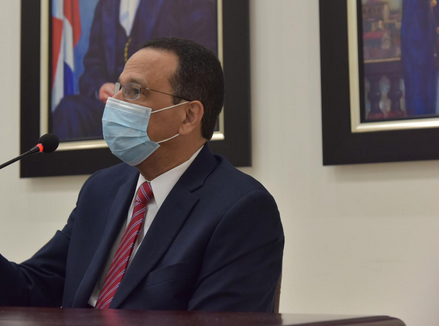
Ministro Peña Mirabal revela presentará propuesta al CNE para que todos los estudiantes sean promovidos de grado

Hoy Digital - ¡Atención! Propuesta que presentará ministro de ...
SANTO DOMINGO. -El ministro de Educación, Antonio Peña Mirabal, reveló que se analizan varias opciones para presentar una propuesta al Consejo Nacional de Educación (CNE) con relación al cierre del presente año escolar, una de las cuales consiste en recomendar la promoción al grado siguiente de todos los estudiantes con dos opciones: una completa y otra condicionada.
Indicó que en la propuesta, aún en elaboración por el equipo pedagógico del MINERD, y que debe ser aprobada por el Consejo Nacional de Educación (CNE), se tomaría en cuenta el promedio de notas registrado por los docentes sobre cada alumno hasta al último día de clases presencial del pasado 12 de marzo.

Peña Mirabal explicó que los estudiantes que hayan alcanzado promedios por encima de los 70 puntos pasarán de manera automática al grado siguiente, sin embargo, aquellos estudiantes cuyos promedios hayan estado por debajo de los 70 puntos también serían promovidos de curso, pero con la condición de recibir un reforzamiento y una evaluación por parte de los docentes, mediante la presentación de un proyecto o trabajo que se les asignará.
Dijo que la propuesta está sustentada en que se ha comprobado que los docentes habían impartido a los estudiantes el 70% del currículo, en el momento que fueron suspendidas las clases presenciales.
“Aquellos estudiantes que al 12 de marzo pasado hayan agotado el 70 por ciento del currículo, con una acumulación de las calificaciones mínimas requeridas, serían promovidos de grado”, expuso.
Entrevistado la noche de este miércoles por la periodista Alicia Ortega en Noticias SIN de la televisora Color Visión, y por el profesor Julio Batista del programa Hablan los Educadores, el titular de la institución rectora de la educación preuniversitaria fue reiterativo al aclarar que los estudiantes que no reúnan ese requisito fundamental en la evaluación de grado, deberán participar del reforzamiento virtual que se lleva a cabo desde la declaración de emergencia nacional por la pandemia.
Explicó que, una vez esos estudiantes pendientes para pasar de grado concluyan el actual reforzamiento virtual, el próximo año escolar se les exigirá la entrega de un trabajo o proyecto que les permita completar las calificaciones requeridas para avanzar el siguiente curso.
“En este momento de la grave crisis sanitaria, la cual ha generado tantas frustraciones en las sociedades mundiales, en especial en el seno de las familias, las evaluaciones tendrán que aplicarse con la mayor flexibilidad posible para evitar afectar el progreso de los estudiantes”, destacó el funcionario.
Consideró que, ante esa realidad, lo recomendable será impartir las evaluaciones con ese grado de flexibilidad, de tal manera que todo ese estrés y frustraciones acumuladas durante el confinamiento en los hogares se pueda contrarrestar con un mínimo de rigurosidad en las evaluaciones.
Peña Mirabal manifestó que para evitar que los estudiantes lleguen con lagunas al grado siguiente avanzado en el actual año escolar, se les ha estado enviando de manera virtual los contenidos priorizados del 30 por ciento del currículo rezagado, más un reforzamiento de todo lo que se impartió hasta el 12 de marzo.
“Estamos contemplando que el próximo año escolar se anticipe en su inicio en la primera semana de agosto venidero, para de esa manera aprovechar los primeros 30 o 45 días en la impartición del 30 por ciento pendiente del currículo, con las materias fundamentales y básicas sin las cuales el estudiante no puede avanzar de grado”, enfatizó.
Agregó que durante esos primeros 30 o 45 días del próximo año escolar, los estudiantes podrán recibir el reforzamiento de manera presencial en las aulas, con los contenidos priorizados y así evitar que continúen con lagunas en todo el ciclo educativo.
El incumbente del MINERD advirtió que, ante la realidad sufrida por el sistema educativo nacional por el COVID 19, la preparación de los estudiantes requiere del concurso de los docentes y de las familias.
En el caso particular de las familias, Peña Mirabal resaltó el gran esfuerzo y la contribución de los padres apoyando a sus hijos en todos los contenidos que  los maestros y maestras de las escuelas y los colegios privados están enviando a través de la plataforma tecnológica enlínea.minerd.gob.do que ha diseñado el MINERD.
“Esto debe ser un esfuerzo de todos en torno al tema educativo. Nosotros en el MINERD haremos lo que nos corresponde, pero siempre hemos sostenido que la familia juega un rol preponderante en la formación de los estudiantes. El trabajo de los docentes no se ve consolidado si no cuenta con el monitoreo, supervisión y acompañamiento de nuestros muchachos y muchachas por parte de sus familiares”, aseveró.
Expuso que la plataforma tecnológica puesta en funcionamiento por el Ministerio de Educación a disposición de los docentes y los estudiantes, cuenta con los contenidos por grado y por materia que se imparten en el currículo.
“Todos los días recibimos cientos de informaciones a través de las direcciones regionales, de los maestros y las maestras que están enviando documentación y supervisando que las familias procesen el material que les llega de manera virtual”, puntualizó.

Coronavirus: por qué covid-19 se llama así y cómo se nombran los virus y las enfermedades infecciosas

Coronavirus

Image captionLa categoría taxonómica del coronavirus, al cual pertenece este nuevo virus, fue revelada en 1968. Fue llamada así por asemejarse a la corona solar.


De acuerdo al portal Sprinklr.com, las palabras coronavirus y covid-19 (que designa la enfermedad causada por el virus) fueron buscadas unos 20 millones de veces en un solo día a través de Google, Facebook y Twitter el 11 de marzo.


Más allá de las redes, esas dos palabras han dominado nuestras conversaciones y hasta nuestros pensamientos en las últimas semanas.

Pero ¿cuál es el origen de ambas palabras que han sellado los primeros meses de 2020, sinónimo de esta pandemia global que deja al momento decenas de miles de contagiados y más de 6.000 personas muertas?

Covid-19
Para el nombre covid-19, hay que remontarse al 11 de febrero de este año.

En esa fecha, la Organización Mundial de Salud (OMS) dio a conocer el nombre de la enfermedad que comenzó a propagarse en la ciudad de Wuhan, China, desconcertando a los expertos en salud.

"Tenemos un nombre para la enfermedad: es covid-19", dijo el director de la organización, Tedros Adhanom .

De acuerdo a la explicación de la OMS, el nuevo nombre se toma de las palabras "corona", "virus" y disease (enfermedad en inglés), mientras que 19 representa el año en que surgió (el brote se informó a la OMS el 31 de diciembre de 2019).

Sin embargo, esa es la designación de la enfermedad causada por el virus.

Al virus, el Comité Internacional de Taxonomía de Virus (ICTV, por sus siglas en inglés) lo llamó SARS-CoV-2 , un miembro de la familia de otros virus que fueron detectados antes, los SARS-CoV, dejando en claro que este era un virus totalmente nuevo...


Este virus fue incluido dentro de la categoría taxonómica de los Coronaviridae , CoV, o Coronavirus , llamado así por las extensiones que lleva encima de su núcleo que se asemejan a la corona solar. Su descubrimiento fue revelado en la revista Nature en 1968.

Una de sus principales características es que causan afecciones respiratorias (como el síndrome respiratorio agudo grave, SARS por sus siglas en inglés).

Pero ¿cómo llegaron a utilizar estos nombres tan técnicos y por qué era tan importante darle un nombre al virus?

Cómo se designa un virus?

Aquel 11 de febrero, el jefe de la OMS se apresuró a dar un nombre que evitara cometer los errores que se dieron en el pasado: la estigmatización de un país, un animal o una región del planeta.

"Teníamos que encontrar un nombre que no se refiriera a una ubicación geográfica, un animal, un individuo o un grupo de personas, y que también fuera pronunciable y relacionado con la enfermedad", explicó Adhanom.

" Tener un nombre es importante para evitar el uso de otros nombres que pueden ser inexactos o estigmatizantes . También nos da un formato estándar para usar en futuros brotes de otras y nuevas versiones del coronavirus", agregó.


Esa importancia quedó en evidencia por una pandemia reciente: el H1N1, gripe A, que en un principio fue llamada gripe porcina, lo que la vinculaba directamente a una especie animal.
De hecho, en Egipto se sacrificaron 10.000 cerdos a causa del pánico que causó el nombre.
"Es probable que haya surgido con una transmisión de cerdos a humanos, pero el motivo por el cual se tornó una enfermedad peligrosa es que se contagiaba entre humanos", le dijo a la BBC la periodista Laura Spinney en su libro "Jinete Pálido: la gripe española de 1918 y cómo cambió al mundo".

Para cambiar eso, en 2015 la OMS emitió nuevas reglas para nombrar enfermedades y evitar errores del pasado.

La tarea urgente de darle un nombre formalmente es responsabilidad del ICTV.
Y las directrices se dieron así: el nombre del nuevo coronavirus no debía incluir:
Sitios geográficos.

Nombres de personas.

El nombre de un animal o un tipo de comida.

Referencias a una cultura o industria en particular.


Se consideró además que el nombre debía ser corto y descriptivo, como por ejemplo el SARS.


miércoles, 6 de mayo de 2020

Importante. ¿Qué pasa si no hay elecciones antes de agosto?

SANTO DOMINGO.-La pandemia del Covid-19 ha irrumpido en nuestro país en el peor momento constitucionalmente posible: un año electoral con un calendario de por sí extraordinariamente complicado.


Aunque, por fortuna, las elecciones municipales pudieron realizarse, las presidenciales y congresuales no podrán serlo en la fecha constitucionalmente prevista, situación que ya reconocen los actores del sistema político.

Sin embargo, la imprevisibilidad del calendario que nos va imponiendo la pandemia plantea una pregunta importante. ¿Qué pasa si no se celebran las elecciones presidenciales y congresuales antes del 16 de agosto? SEGUIR LEYENDO


Educación plantea la posibilidad de adelantar próximo año escolar

SANTO DOMINGO.- El ministro de educación Antonio Peña Mirabal planteó la posibilidad de que se adelante el próximo año escolar debido a la falta de docencia presencial producto de la  cuarentena y el confinamiento por la pandemia del coronavirus.
Peña Mirabal dijo  que en vez de comenzar en la fecha ordinaria que siempre se prevé que es en la tercera semana de agosto, podríamos estar comenzando la primera semana de agosto y que los primeros 30 o 45 días del próximo año escolar pueden ser utilizados para impartir contenido priorizado de ese 30% que no se pudo impartir de manera presencial.


El ministro resaltó que para que esta medida funciones debe de hacerse un esfuerzo en conjunto, no solo del ministerio de educación, de los maestros, sino también de la familia dominicana. 
Ministro defiende clases virtuales
El ministerio de Educación aseguró tener demostraciones fehacientes de la entrega de muchos padres apoyando a sus hijos en todo los contenidos que los maestros están enviando por vía de redes sociales, plataformas tecnológicas puestas a disposición de nuestros estudiantes

Dijo que se hace necesario el compromiso, la entrega y el esfuerzo de toda la sociedad en torno a este tema. “Nosotros haremos desde el ministerio de Educación lo que nos corresponde hacer pero siempre he dicho que la familia juega un rol preponderante en la formación de nuestros muchachos. Todo el esfuerzo que pueda hacer un maestro en un aula no se ve consolidado si no tiene el apoyo en el hogar de la familia de los contenidos que han sido en cuanto a monitoreo y acompañamiento de los muchachos en sus respectivos hogares” añadió.
Dijo que constantemente están llegando a los maestros y directores regionales y distritales materiales de los trabajos que realizan los alumnos en sus hogares, así como los chat de los profesores y otras materiales que pueden dar fe de que se está realizando un trabajo educativo en medio de la cuarentena.

Como elimina él Vientre caído en tan solo 10 días con este remedio.

No olvides dejar un saludo para saber que te llegan mis Consejos.

La falta de ejercicios, la mala postura, el embarazo y otros factores hacen que aparezca la flacidez en el vientre. Por tal razón, los expertos recomiendan realizar mínimo tres veces por semana algún deporte.

Independientemente a las actividades físicas que desarrolles, en esta ocasión te presentamos tres remedios caseros que resultan muy efectivos:

1. Aceite de coco
Sus propiedades son beneficiosas para recuperar la elasticidad de la piel . Lo más recomendable es aplicar un poco de aceite de coco en el vientre antes de bañarte, dejar que lo absorba y luego vestirte. No te dejará la sensación pegajosa, por el contrario, lucirá suave y radiante.

2. Gel de aloe vera
La sábila tiene muchas propiedades, es regenerativa y reafirmante, así que será tu aliada para combatir esa flacidez del abdomen.

El gel debe aplicarse directamente en la zona, justo después del baño para que los poros de la dermis impregnen mejor el producto y los resultados se noten.

3. Exfoliante de café
Expertos señalan que la cafeína es buenísima como reafirmante, ya que ayuda a mejorar la circulación y es beneficiosa para evitar que la grasa se acumule en zonas que no deseamos.

Para preparar tu propio exfoliante necesitas tres productos: café en polvo, azúcar y aceite de almendras. Mezcla los ingredientes y aplícalo en la barriga realizando un masaje circular por 10 minutos y posteriormente retira la pasta con ayuda de una toalla húmeda.

Muy importante. ¿COMO FUNCIONAN LAS AFP?