Vistas de página en total

domingo, 10 de mayo de 2020

Piden combatir COVID-19 con ganancias de AFP, ARS, las fortunas y los «robos»


SANTO DOMINGO, República Dominicana.- El Movimiento Camaañista (MC) pidió paliar las secuelas del coronavirus con las ganancias de las AFP y ARS, de las fortunas y lo robado, y además denunció que el Gobierno y las clases dominantes mantienen sobre las espaldas de los trabajadores y los sectores más empobrecidos el peso de la actual crisis, valiéndose de iniciativas que cada vez hacen más pesada esa carga.
La serie de alternativas que planteó previó que no serán consideradas porque el Gobierno y las clases dominantes, subrayó el MC, «voluntariamente no cesarán en su afán de seguir cebándose con la sangre y el sudor del pueblo trabajador».
La entrega de entre un 20 a un 30 % de los ahorros de los afiliados a la Administradoras de Fondos de Pensiones (AFP) se inscribe en ese mismo afán, remarcó.
Se trata, dijo, de una «engañosa propuesta» planteada por legisladores demagogos de una oposición formal que constata «la determinación gubernamental de no asumir un programa básico de protección a las familias más golpeadas por la crisis, que hubiera permitido mantener la cuarentena como mandan las recomendaciones médicas».
Ese camino, sostuvo el MC en una declaración pública, comenzó una vez declarada la pandemia cuando se decidió financiar gastos sanitarios y también «precarias e insuficientes compensaciones salariales y reparto de alimentos con recursos provenientes del Fondo de Riesgos Laborables asignados a los trabajadores».
Más deuda pública contratada para que luego sea pagada con recursos provenientes de una mayor carga impositivas sobre quienes menos tienen es el otro filón de lo mismo, sostuvo el texto.
«Además de permitir el despido y la suspensión sin salarios de un millón de trabajadores que se agregan a otro millón de desempleados y a dos millones de trabajadores informales empobrecidos, recurre por esas vías a 32 mil millones de pesos, la mayoría procedente o pagadero por los propios afectados» expuso el MC en esa declaración pública
En tal sentido, indica que el Movimiento Caamañista se une a las voces de quienes «reclaman, en cambio, la creación de un fondo de contingencia que permita pagar con bonos de emergencia el salario completo de los trabajadores parados y cubrir además las necesidades básicas de los trabajadores cuentapropistas y sectores empobrecidos y hambreados por el sistema».
Ese fondo de contingencia debe financiarse, reclama, con «las ganancias confesadas y encubiertas de las AFP y las ARS, puesto que solo el año pasado las AFP registraron más de 164 mil millones de pesos en ganancias y gastos operacionales sumamente abultados».
«Es inaceptable, además, que lo aportado por el pueblo trabajador para su fondo de pensiones sea administrado por la banca privada para especular y apoderarse de las ganancias», agregó la agrupación.
«Conste nuestro absoluto rechazo a esa intención de reducir aún más las pensiones de hambre que la ley vigente concede a quienes  se ha pasado la vida trabajando»,en lugar de ir contra las ARS y las AFP privadas que «son empresas parasitarias al servicio del gran capital financiero y que ameritan ser eliminadas».
Tal eliminación debe forjarse, remarca, en «una transformación profunda de la legislación sobre pensiones y seguridad social, que debe también contemplar el control obrero sobre sus aportes».
En la medida en que «se extiende y profundiza esta multi-crisis resulta imprescindible -prosigue- utilizar otras fuentes alternativas para las necesarias compensaciones, tales como son las fortunas de los corruptos y las voluminosas ganancias del  sector financiero».
Asimismo, con las ganancias de los dueños de los aeropuertos privados y las  empresas generadoras eléctricas, las importadores-distribuidores de bienes de consumo masivo, especialmente «Falcondo y Barrick Gold, esta última beneficiaria privilegiada de los precios récord del oro y de su producción ininterrumpida durante la crisis».
También apunta al rastreo y recuperación de «los recursos de la corrupción, solo para mencionar algunos» caminos alternativos, pero a la vez admite que «la insensibilidad social del régimen y las clases dominantes, que no desaprovechan oportunidad alguna para dar riendas sueltas a su ambición de lucro desmedido», desechará sus propuestas.
«La más mínima conquista solo puede ser producto de la presión popular. Pero más allá de esos reclamos inmediatos, procede que el pueblo el soberano, armado con la  conciencia  de la necesidad de un cambio radical, se disponga a desmontar este sistema explotador, decadente y corrompido a través de una Constituyente Popular y Soberana, creadora de una verdadera democracia y bienestar social colectivo».

La pandemia de coronavirus deja unos 75.000 fallecidos en todo el mundo

Vigésimo cuarta jornada desde que se decretó el estado de alarma en España. Foto: EFE
Unas 75.000 personas han perdido la vida por la pandemia de Covid-19, la enfermedad derivada del nuevo coronavirus originado en China y que ha afectado ya a 184 países y territorios, hasta dejar más de 1,3 millones de casos en todo el mundo.
Estados Unidos acumula más de 368.000 de estos contagios y unos 11.000 fallecidos, de los cuales alrededor de una tercera parte corresponden al estado de Nueva York. Solo en la ciudad homónima, sobre la que rige una orden de confinamiento, se han registrado unas 3.500 víctimas mortales.
Italia sigue encabezando el listado de la Universidad Johns Hopkins en cuanto a número de fallecidos con más de 16.500, aunque en número de casos se ha visto superada por España, que ha alcanzado ya los 136.000, frente a los más de 132.000 del país transalpino. En España, el número de víctimas de Covid-19 supera las 13.300.
Alemania, con más de 103.000 positivos y más de 1.800 fallecidos, y Francia, con casi 100.000 contagios y casi 9.000 víctimas mortales, son los siguientes países en la lista elaborada por la Universidad Johns Hopkins a partir de datos oficiales.
Ambos superan a China, origen de la enfermedad, y donde la pandemia parece estar contenida tras registrar unos 82.000 casos y más de 3.300 muertos. El país asiático no ha incluido ningún fallecido ni ningún caso de transmisión local en el balance publicado este martes.
Irán, el país más afectado de Oriente Próximo, figura a continuacion, con más de 60.500 positivos y 3.700 fallecidos, mientras que Reino Unido supera las 5.300 víctimas mortales tras contabilizar ya más de 52.000 casos, entre ellos el del primer ministro, Boris Johnson, que este lunes ha pasado a cuidados intensivos, 11 días después de confirmar públicamente que había dado positivo.
Turquía ha mantenido su avance en estos últimos días y contabiliza 30.200 casos y al menos 649 fallecidos, mientras que Suiza acumula más de 21.600 positivos y 765 muertos. Por encima de los 20.000 positivos figura también Bélgica (unos 20.800), donde han perdido la vida más de 1.600 personas.
Países Bajos ha confirmado casi 19.000 contagios, entre ellos los de 1.874 fallecidos, según este listado, que continúa con Canadá -unos 16.600 positivos y 323 muertos-, Austria -unos 12.300 casos y 220 víctimas mortalesBrasil -más de 12.200 enfermos y 566 fallecidos- y Portugal -unos 11.700 positivos y 311 víctimas-.
Corea del Sur, que durante unas semanas fue el segundo país por detrás de China en número de casos, también ha superado el umbral de los 10.000 contagios (unos 10.300) y acumula al menos 192 fallecidos. Por su parte, Israel ha registrado más de 8.900 enfermos y 57 víctimas mortales.
Suecia (más de 7.200 casos y 477 muertos) figura por encima de Rusia, que ha superado este lunes el listón de los 6.000 contagios (unos 6.300) y ha confirmado al menos 47 fallecidos. Noruega (unos 5.800 enfermos y 76 víctimas) y Australia (unos 5.800 positivos y 43 fallecidos) figuran a la par y por delante de Irlanda (5.300 casos y 174 muertos).
Por encima de 4.000 casos figuran Dinamarca, República Checa, Chile, India, Polonia y Rumanía, si bien Japón, que recurrirá por primera vez al estado de emergencia, se acerca a dicho umbral. La Universidad Johns Hophkins también identifica con más de 3.000 positivos a Pakistán, Malasia, Ecuador y Filipinas.
Además, ya han registrado más de 2.000 positivos Luxemburgo, Arabia Saudí, Perú, Indonesia, Tailandia, Serbia, Finlandia, Panamá y Emiratos Árabes Unidos. Qatar, República Dominicana, Grecia, Sudáfrica, Argentina, Colombia, Islandia, Argelia, Singapur, Ucrania, Egipto, Croacia, Nueva Zelanda, Marruecos, Estonia, Irak y Eslovenia han sobrepasado el millar.
Personas curadas
La cifra de personas curadas se acerca a nivel mundial a las 285.000, de los cuales más de 77.000 corresponden a China, el país donde se registraron los primeros casos y en el que, por tanto, ha transcurrido más tiempo desde que se detectó el brote.
España, con unos 40.400 recuperados, figura a continuación en el balance de curaciones, por delante de Alemania (36.000), Irán (24.200), Italia (22.800), Estados Unidos (19.800), Francia (17.400), Suiza (8.000) y Corea del Sur (6.700).

QUE TONTOS...VIDEO.. INTENTARON ATRACAR CON PISTOLAS DE JUEGUETES

ENLACES DE GRUPOS PARA WHATSAPP (NO. 01)

HOLA AQUI LES DEJO  LOS ENLACES
DE LOS GRUPOS. ( SI QUIERE QUE TE COLOQUE EN ESTA PAGINA SOLO DEJAME UN COMENTARIO Y TE ESCRIBO...
COVID-19 - Todo lo que debes recordar cuando usas los grupos de ...
PARA AGREGARSE CLIC EN EL GRUPO QUE DESEES


 SI QUIERE QUE TE COLOQUE EN ESTA PAGINA SOLO DEJAME UN COMENTARIO Y TE ESCRIBO...

sábado, 9 de mayo de 2020

10 mysterious police cases that are still unsolved

10 mysterious police cases that are still unsolved (case 1)

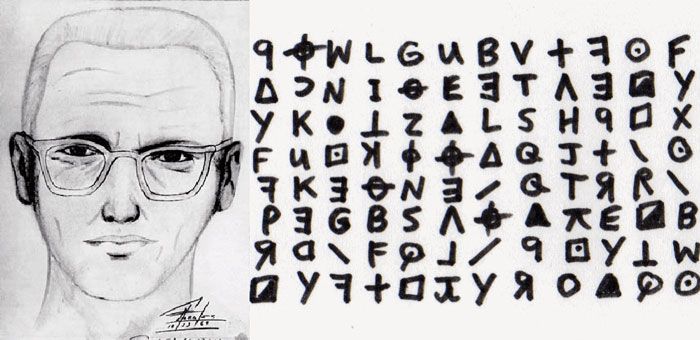
1. THE ZODIAC KILLER

 (Photo/mk-zodiac.com)
Most people are usually quiet about their crimes, but "Zodiac", as he dubbed himself, was anything but. From 1968-1969, he terrorized San Francisco with his murder spree, taunting the police with his coded letters to the local paper. He had at least five killings directly connected to him, although he claims to have killed 37 people. His terror began when Betty Lou Jensen, 16, and David Arthur Faraday, 17, were found lying outside of their bullet-peppered car. Jensen was found dead at the scene with five gunshot wounds to her back, while Faraday died of a bullet to the head en route to the hospital. Half a year later, a couple who parked their car four miles away from that crime scene was also gunned down, one injured and one killed. The survivor, Michael Mageau, was able to give a description of the killer. He described a heavyset white man around 5'8". It would be the Zodiac Killer himself that would give the police the remaining evidence.
 At 12:48 a.m. that same night, police received a strange call:
"I wish to report a double murder. If you go one mile east in Columbus Parkway to a public park, you will find the kids in a brown car. They have been shot with a nine-millimeter Luger. I also killed those kids last year. Good-bye."  
A month later, newspapers received the first letter from the Zodiac Killer. He demanded them publish the letter on the front page or he'd go on a killing rampage. The letter described the murders, all written with mysterious ciphers that seemed to form a code. This was a common theme with the other letters he would send, all signed with a crossed-circle symbol. One such letter was decoded by a high-school teacher and his wife. It read:
 "I LIKE KILLING PEOPLE BECAUSE IT IS SO MUCH FUN IT IS MORE FUN THAN KILLING WILD GAME IN THE FORREST BECAUSE MAN IS THE MOST DANGEROUE ANAMAL OF ALL TO KILL SOMETHING GIVES ME THE MOST THRILLING EXPERENCE IT IS EVEN BETTER THAN GETTING YOUR ROCKS OFF WITH A GIRL THE BEST PART OF IT IS THAE WHEN I DIE I WILL BE REBORN IN PARADICE AND THEI HAVE KILLED WILL BECOME MY SLAVES I WILL NOT GIVE YOU MY NAME BECAUSE YOU WILL TRY TO SLOI DOWN OR ATOP MY COLLECTIOG OF SLAVES FOR MY AFTERLIFE EBEORIETEMETHHPITI."
The Zodiac Killer would go on killing and leaving frustrating evidence for the police– coded letters, anonymous phone calls, the crossed-circle written on victims' cars, sending over blood-stained shirts, accounts from survivors– but the police never found him.  
Read more about the Zodiac Killer here

10 mysterious police cases that are still unsolved (case 2 )

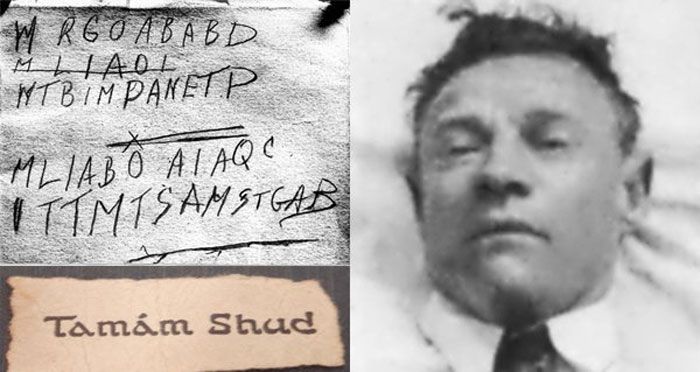
2. THE TAMAN SHUD CASE

 (Photo/oddx.com)
The Zodiac Killer wasn't the only one who loved to use codes. On the morning of December 1st, 1948, a body was found on Somerton Beach in Adelaide, Australia. The man's body was in perfect condition, with no injuries to be found. He was well dressed, although all the labels on his clothes were missing. In his pocket was a train ticket to Henley Beach, never to be used. It would be a month later when they would find a suitcase linked to him at Adelaide Railroad Station. Its label was removed as well as those on the articles of clothing inside it. Unfortunately, it led to no clues, just like his autopsy, which reported no foreign substance in his body that could directly link his death to poisioning. A month later they would find the most substantial but puzzling evidence in a secret pocket in the man's trousers. It read, "Taman Shud."   
Public library officials called in to translate the phrase. They concluded that it meant "ended" or "finished", which can be found in a collection of poems entitled The Rubaiyat of Omar Khayyam. Immediately police ran a nationwide search for the book where this scrap paper was torn from. A man came forward, claiming that he found the book in the backseat of his unlocked car a week or two before they discovered the body. On the back of it was a strange code scrawled out in pencil. A phone number linking to a nurse was also discovered, though the nurse said she had given a copy of the Rubaiyat to an army officer named Alfred Boxall. Both the man who found the book and the nurse denied any connection with the dead man. They never got any further with the case, although many suspect it may have been a suicide since the book's theme was about having no regrets when life ends. Others think he may be a spy. And until there are any breaks in the case, his grave will remain reading, "Here lies the unknown man who was found at Somerton Beach 1st Dec. 1948."
Read more about The Taman Shud Case here.

10 mysterious police cases that are still unsolved (case 3)

3. THE TARA CALICO CASE

 (Photo/crimelibrary.com)
On the morning of September 20th, 1988 in Belen, New Mexico, it seemed like a perfect day to ride a bike. Tara Calico borrowed her mother's pink bike to go out for a spin. Extroverted and active, she worked as a bank teller and was studying to become either a psychologist or psychiatrist. She planned to play tennis that afternoon and asked her mom to drive out after her in case she got a flat tire and didn't return home by noon. She never did return. Every lead went to a dead end until a year later, when a photo was found depicting a young woman her age and a missing boy, both gagged.  
The Polaroid photograph was found in a parking lot outside a Junior Food Store in Florida. The nine-year-old, Michael Henley, went missing in the same area as Calico in April of 1988 when he was hunting turkeys with his father. They appeared to be in the back of a van, with a copy of a book written by V.C. Andrews, Calico's favorite author, lying right beside the girl. Initially, Tara's mother didn't think the girl was her, but the girl in the photograph had a scar identical to Calico. But still, due to the lack of evidence, many experts dismiss the photograph. In 1990, Michael Henley's body was found in Zuni Mountains where he was hunting, which strongly disconnects the theory that the two were abducted and taken to Florida. Calico's parents would eventually die, never finding out who took their daughter.
Read more about the Tara Calico Case here.

10 mysterious police cases that are still unsolved (case 4)

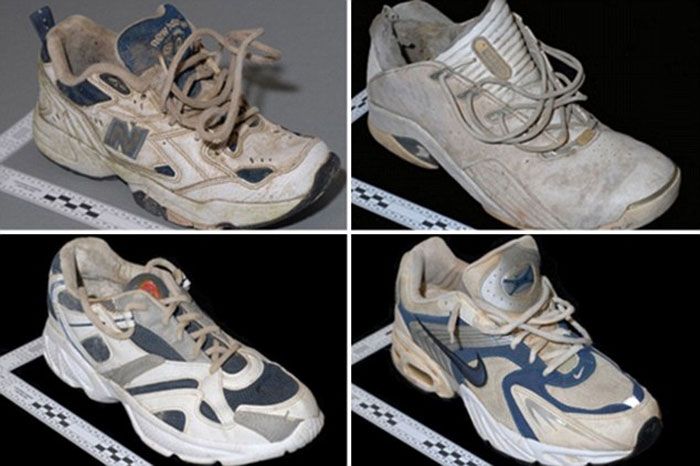
4. THE SEVERED FEET MYSTERY

 (Photo/thedailybeast.com)
In 2007, a girl was roaming a beach in British Columbia when she found a sneaker. To her horror, as she opened up the sock, she found that a human foot was inside. Since then, a number of severed feet have washed ashore. The feet have been connected to five men, one a woman, and three of unknown sex. Throughout the years, with a hoax foot thrown here and there, the case has never been completely closed, with many theories floating around as to who the feet belonged to.
The Vancouver police managed to identify one foot in 2008, matching its DNA to a man who was described as suicidal. They later were able to match two other feet to a woman who was also believed to have committed suicide. Because of these findings, many speculate that the feet belong to those who jumped off a bridge to their deaths. However, because of the rarity of only feet and no other body parts showing up, some believe that the feet were connected to a plane crash by a nearby island. Other suggest they were those of the victims of the Asian Tsunami in 2004, since the make of the shoes were all manufactured before 2004. Whatever sources these feet are coming from, they have left the world baffled for years.
Read more about The Severed Feet Mystery here.  

10 mysterious police cases that are still unsolved (case 5 )


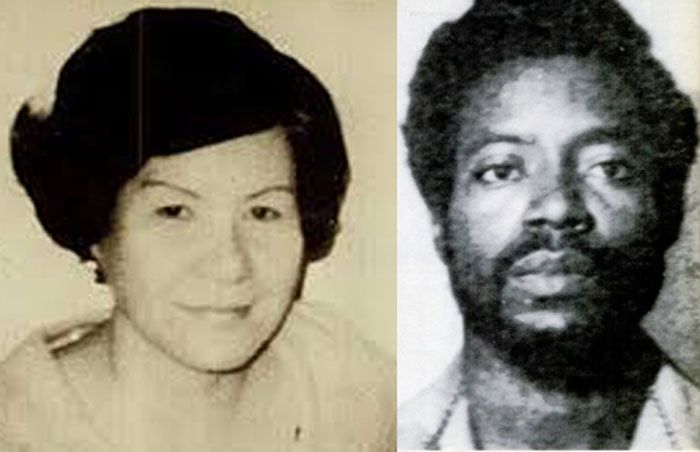
5. THE DEAD WOMAN WHO NAMED HER KILLER

 (Photo/historicmysteries.com)
Although this case has been solved, how it was solved remains a mystery. In 1977, a respiratory therapist in Chicago was murdered in her apartment. Teresita Basa was found under a flaming mattress, a butcher knife buried in her chest. Police attempted to track her stolen jewelry with no luck. They also failed in trying to link any of the suspects to the crime. It seemed impossible to find the perpetrator, that is, until Remy Chua, a co-worker who barely knew the victim, involuntarily became a leading source of information.
Chua began having frequent visions and nightmares about Basa. It started in the locker room of her work, where she experienced seeing a man's face behind Basa. This would repeat in her dreams. Chua then began channeling Basa's spirit when conversing with her husband. While channeling Basa's shirit, Chua told her husband the entire story of Basa's murder. She claimed an orderly at the hospital named Alan Showery was helping Basa with her television when he assaulted her. He then killed her and set her mattress on fire. The spirit was even able to give the details of what happened to her jewelry, which was given to Showery's common-law-wife. Mr. Chua convinced his wife to give these details to the police.
The police were skeptical at first, but after seeing the Basa's jewelry on Showery's wife (Basa's cousin was able to confirm it just as the spirit said she could), the police were able to convict the man for fourteen years in jail. Unfortunately, there was not enough evidence to convict him longer. But was it really Basa's ghost who named her killer? Perhaps Chua had knew some facts in the case and disguised it as a spirit possessing her? What ever led police to the killer remains to be a mystery.
Read more about the case of The Dead Woman Who Named Her Killer here.  

10 mysterious police cases that are still unsolved (case 6)

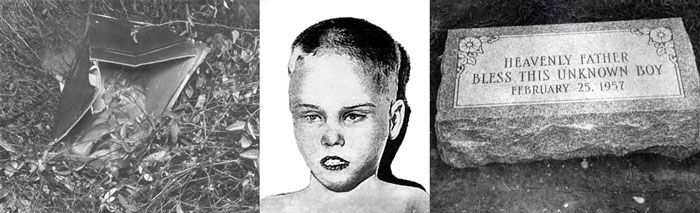
6. THE BOY IN THE BOX

 (Photo/nydailnews.com/historicalmysteries.com/glogster.com)
It was the year 1957 in Philadelphia when a hunter found the bruised body of a boy in a JC Penney box. The boy, around four to six years-old, was nude and wrapped in flannel. He seemed to have died from blows to the head. Fearing his muskrat traps would be confiscated by police, the hunter didn't report the body. It was two days later when a college student found the body, that the police started on the case of "America's Unknown Child." It immediately attracted the media's attention, and flyers of the boy were seen throughout Pennsylvania.
Although police received thousands of leads, they were never able to uncover the identity of the young boy. They tried tracing back the JC Penney box and checking the boy's fingerprints, but everything led to a dead end. However, there were two promising leads of note. One lead involved a foster home located 1.5 miles away.
A medical examiner, who pursued the case until his death, had a psychic lead him to the foster home, where he found a bassinet similar to the one that was sold in the box. Hanging on the clothesline were blankets much like the one wrapped around the boy. He believed the boy belonged to the stepdaughter of the man who ran the home, and she didn't want to be found as an unwed mother. Police interviewed the couple, but closed the investigation.
In 2003, they opened the case again when interviewing a woman identified as "M" who claimed her abusive mother bought the child back in 1954. According to her, her mother killed the boy in a fit of rage. Because "M" was mentally unstable, the investigation was closed as well, leaving the boy to remain "America's Unknown Child."       
Read more about The Boy in the Box here.

10 mysterious police cases that are still unsolved (Case 7)

7. THE JEANETTE DEPALMA CASE

 (Photo/weirdnj.com)
Usually people connect witches to Salem, MA, but for this particular case, the witches were in Springfield, New Jersey. It all started in 1972 when a dog brought home a decomposed forearm home. This prompted a police search and a body was soon found afterwards atop a cliff in Springfield. The body was identified to be that of Jeanette DePalmer, a 16-year-old who had gone missing for six weeks. Immediately, rumors began spreading as to the cause of her death. The hill where she was discovered was covered with occult symbols and many believed her body was placed on a makeshift altar. Many locals, even some police members, blame a coven of witches, otherwise known as Satanists, who used DePalma for a human sacrifice.  
Because of a flood, much of the case's details have since been destroyed. However, some reports from local papers mention that police couldn't determine the cause of death due to her badly decomposed body. They had also investigated a local homeless man who was a prime suspect, only to find no connection with the killing. As for the occult theory, many believe that DePalma may have provoked a group of Satan worshipping teens at her high school when she was trying to evangelize them. She was involved with a group who helped drug addicts by finding faith in Christ. The reverend who ran the group theorized that she was selected as a sacrifice to the group because of this. Was she a human sacrifice? Or did these suspicions help hide the real killer? Perhaps no one will ever know.
Read more of The Jeanette DePalma Case here.    

10 mysterious police cases that are still unsolved (case 8)

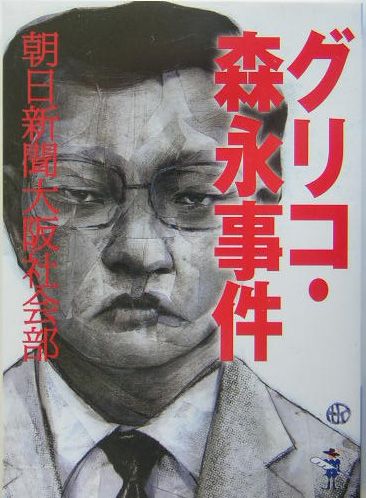
8. THE GLICO-MORINAGA CASE

 (Photo/cdn.kizaz.com)
Okay, brace yourselves, because this case is as twisted as a TV crime show. It deals with the Japanese companies Ezaki Glico, best known for its Pocky snacks, and Morinaga. In 1984, two armed men in masks broke into CEO Katsuhisa Ezaki's mother's home and bound her, taking the house key of Glico's CEO. Entering his house, they also tied up his wife and daughter. Mrs. Ezaki attempted to negotiate money with the men, but they were after something else. Cutting off the telephone cords, they raided the bathroom, where Ezaki and his other two children were hiding. They abducted Ezaki and held him hostage at a warehouse. They issued a ransom for 1 billion yen and 100 kilograms of gold bars. Their plans were discovered when Ezaki managed to escape three days later.
A few weeks later, just when the company thought it had escaped extortion, vehicles in its headquarter's parking lot were set on fire. Then, a container with hydrochloric acid and a threatening letter addressed to Glico were found in Ibaraki, where the warehouse was located. This began a string of letters from a person or group that dubbed itself "The Monster with 21 Faces," named after a villain in a Japanese detective series. The letters threatened the company's products, claiming that their candies were laced with potassium cyanide soda. Glico was forced to pull the products off the shelves, resulting in a $21 million loss and the layoff of 450 part-time workers. 
After months of tormenting Glico, the Monster with 21 Faces decided to look for fun someplace else. Their final letter towards the company read, "We forgive Glico!" With that abrupt ending, they turned their sights on the food companies Marudai Ham, House Foods Corporation, and Fujiya. In exchange of stopping their harassment towards Marudai, one of its employee was to hand them ransom money on a train. That was when an investigator, who disguised himself as an employee, saw the prime suspect, known as the "Fox-Eyed Man." The man was well-built, his hair cut short and permed, with "eyes like those of a fox." After dropping the ransom as instructed, he and another investigator attempted to follow the Fox-Eyed Man, only to lose him. They would get a second chance later on, but he again evaded them.   
After continuing harassment towards the police, a year later Police Superintendent Yamamoto committed suicide by setting himself on fire, ashamed of his failure to capture the Fox-Eyed Man. Five days following the death, the Monster with 21 Faces sent its final letter to the media:
"Yamamoto of Shiga Prefecture Police died. How stupid of him! We've got no friends or secret hiding place in Shiga. It's Yoshino or Shikata who should have died. What have they been doing for as long as one year and five months? Don't let bad guys like us get away with it. There are many more fools who want to copy us. No-career Yamamoto died like a man. So we decided to give our condolence. We decided to forget about torturing food-making companies. If anyone blackmails any of the food-making companies, it's not us but someone copying us. We are bad guys. That means we've got more to do other than bullying companies. It's fun to lead a bad man's life. Monster with 21 Faces."
And with that final statement, the Monster with 21 Faces disappeared, never to be heard from again.
Read more about the Glico-Morinaga Case here.

10 mysterious police cases that are still unsolved (Case 9)

9. THE SS OURANG MEDAN

 (Photo/paranormalqc.com)
Ghost ships aren't just portrayed in legends and movies such as The Pirates of the Caribbean. In this true story, the entire crew mysteriously perished. It all started in 1947, when ships traveling the straits of Malacca (located between Sumatra and Malaysia) heard a troubling distress call:
“All officers including captain are dead, lying in chartroom and bridge. Possibly whole crew dead.” Following the message was some indecipherable Morse code and then finally, “I die.”
An American ship called Silver Star answered the distress call and found the Ourang Medan, but there were no signs of the crew on the deck, even when they tried to call to them. And so they boarded the ship, only to find themselves in a horror scene. Scattered across the deck were the corpses of the Dutchmen, their faces construed in such a way one would think they had witnessed something ghastly before their demise. Even the dog was dead, its face also contorted in agony. The captain's body was found on the bridge, while the communication officer was still at his post, his cold fingers still pressing the telegraph. The American crew went down to the boiler deck to find the same situation. Despite it being over a hundred degrees down there, a cold chill came over them.
Retreating to their ship again, they decided to tow the Ourang Medan to port. But as soon as they attached the tow line, smoke began billowing out of the ship. Moments later it exploded, sinking into its watery grave, taking all its secrets along with it. What horrible thing did the crew witness? Some believe it was the work of the paranormal. Perhaps a band of ghost pirates raided the ship or aliens decided to drop in. Such unexplainable things do happen, as firefighter and EMT Mick Mayers have experienced in his firehouse. Others, however, have more scientific explanations.
Many theorize that the Dutch ship was smuggling hazardous materials such as potassium cyanide and nitroglycerin. Sea water may have interacted with the cargo, causing the toxic gases to be released and poison the crew. The nitroglycerin would later cause the explosion. Or maybe there was trouble in the boiler room and carbon monoxide killed the crew and a fire got out of hand and destroyed the ship. What is most troubling is the fact that, although the Silver Star is very real, there isn't any registration records of the ship. Did the ship even exist, or is it merely a sailor's tale? 
Read more about The SS Ourang Medan here.

10 mysterious police cases that are still unsolved (case 10)

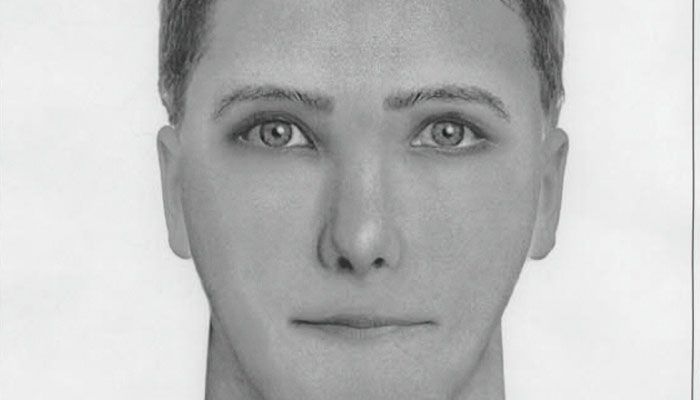
10. THE CAPE INTRUDER

 (Photo/capeelizabeth.com)
This final unsolved case is not a famous case, but a local one that I remember from years ago, occurring in a neighboring town. If not for a brief mention of it in an old clip archive regarding a neighborhood watch, I might have thought it was just my imagination. Back in 2005, in the affluent town of Cape Elizabeth, Maine, the community experienced something unnerving. During the night, victims who kept their doors unlocked, would wake up in the morning to catch a brief glimpse of a man staring at them. Before they could react, the man would flee the scene, leaving the house just as it was before he entered it. Nothing was stolen. Nobody was injured or killed. All that he took was their privacy when he snuck into their bedrooms to watch them sleep. 
A rough sketch depicting a man in his early twenties played on the local news. Everybody seemed to think they knew who it was and the police received a number of calls from concerned citizens naming possible suspects. Although two people named the same person, the police never did catch the "Cape Intruder". After some intrusions in August, December, and February, he never did break in again. Perhaps he had his fill of staring at sleeping bodies during that time period. But the thought that such a person existed and still walks among us is enough to give anyone the chills. And of course, serves as a grim reminder to lock our doors. 


Wow.. scholarships for lawyers

Scholarships (Becas) for Foreign-Trained Lawyers


 En Español: Becas para Estudiantes Internacionales

The University of Miami School of Law is dedicated to helping international students meet their educational expenses through loans, grants and scholarships. In addition to scholarships from home country sources, international students have the opportunity to be considered for various sources of funding.

Dean's Merit Scholarships

The University of Miami School of Law awards partial scholarships each year to entering LL.M. students with excellent academic records and other outstanding qualifications for the post-graduate study of law. Dean's Scholarships are available to LL.M. students and are awarded separately at the time of admission to an LL.M. program. No separate application is required for the Dean's Scholarships; all admitted students are automatically considered for them.


Privately Funded Scholarships

The law school also has the ability to offer awards that are privately funded by our alumni and others to help with financial support for foreign graduate students. Awards are based on merit, need, and other factors.  Some awards are designated for specific LL.M. programs as indicated below:
  • International Arbitration Institute Scholarship - one or more partial tuition scholarships to study in the White & Case International Arbitration LL.M. program.
  • Young ICCA Scholarship - one full-tuition scholarship to study in the White & Case International Arbitration LL.M. program.
  • White & Case/Carolyn B. Lamm Scholarship - one full-tuition scholarship to study in the White & Case International Arbitration LL.M. program.
  • Cobb Family Fellowship: The Scholarship provides a living stipend for a graduate of the University of Iceland to study at the University of Miami for one year. The Cobb Fellowship was created by Charles E. Cobb, Jr., former Ambassador to Iceland and member of the University's Board of Trustees.


Half Scholarships

There are also a multitude of opportunities to receive half-scholarships through one of our various organization partnerships. These include:
Vis Moot: one half-tuition scholarship is available for a present or past student participant, coach or arbitrator in the: Willem C. Vis International Commercial Arbitration Moot Competition in Vienna, Austria or the Willem C. Vis International Commercial Arbitration Moot (East) Competition in Hong Kong, SAR China.
UBA-Rosario Competencia Internacional de Arbitraje: one half-tuition scholarship is available for a present or past student participant, coach or arbitrator in the UBA-Rosario Competencia Internacional de Arbitraje.
Foreign Direct Investment (FDI) Moot Scholarship: one half-tuition scholarship is available for a present or past student participant, coach or arbitrator in the FDI Moot competition.
AIJA: one half-tuition scholarship is available to be awarded to a member.
e-Fellows:, one half-tuition scholarship is available for a present or past participant of the E-fellows LL.M. Day in Berlin, Frankfurt or Munich, Germany.
Moot Madrid: one half-tuition scholarship is available for a present or past participant of the competition.

Research Assistant Program

LL.M. students can be selected to serve as Research Assistants to international faculty during the academic year. This position requires a commitment of 10 hours per week. To be considered for a Research Assistant position at the School of Law, please complete a Research Assistant Request Form and submit it with an application to the International Graduate Law Program office. Miami Law encourages students to apply early if they wish to be considered for a research assistant position.

Scholarship Agreements with International Institutions

Miami Law is committed to attracting the brightest legal minds abroad and strengthening bilateral cooperation in legal education. In an effort to promote stronger ties with foreign law schools and associations we have entered into various cooperation agreements with institutions abroad. The agreements offer a $15,000 USD scholarship toward LL.M. tuition fees for all LL.M. programs that accept foreign-trained lawyers. Up to four outstanding law graduates from each school or four outstanding members of each organization are eligible. Miami Law reserves the right to admit or reject an applicant. Recipients are nominated by each of the foreign law schools or associations. Miami Law will evaluate and award applicants on the basis of their skills and achievements. Universities and Organizations with current agreements:
Nominees must apply for admission to the LL.M. Program and follow all established application procedures and meet standard admissions requirements. Applications are considered on a rolling basis with a priority deadline of May 1 and are reviewed by the Admissions Committee as soon as all required documents are received.
For information On These University Partnerships: Please contact  Yasmina Assis, Associate Director, International Graduate Law Programs & Lecturer in Law at: yassis@law.miami.edu

Other Sources of Funding

Additional scholarships may be available through United States governmental or international organizations, such as the Yellow Ribbon Scholarship Program for U.S. veterans, the Fulbright Graduate Student Scholarship Program and Education USA for international students, the Organization of American States (OAS) Scholarship 
Program for nationals of OAS member states, the Margaret McNamara Education Grant, and the American Association of University Women (AAUW) International Fellowship Program. In addition, funding for international students may be available in their home countries, such as through the  Academic Exchange Service (DAAD) (Germany), BECAS (Chile), the Yamaguchi Foundation (Japan), the Saudi Arabian Cultural Mission (SACAM) or World Wide Studies (Ukraine); similar programs exist in many other countries.

For More Information

For more information on Scholarship Agreements with International Institutions, contact Yasmina Assis, Associate Director International Graduate Law Programs and Lecturer in Law at yassis@law.miami.edu
For all other scholarships, please contact intl-llm@law.miami.edu or the Master's Program (LL.M.) of your interest